
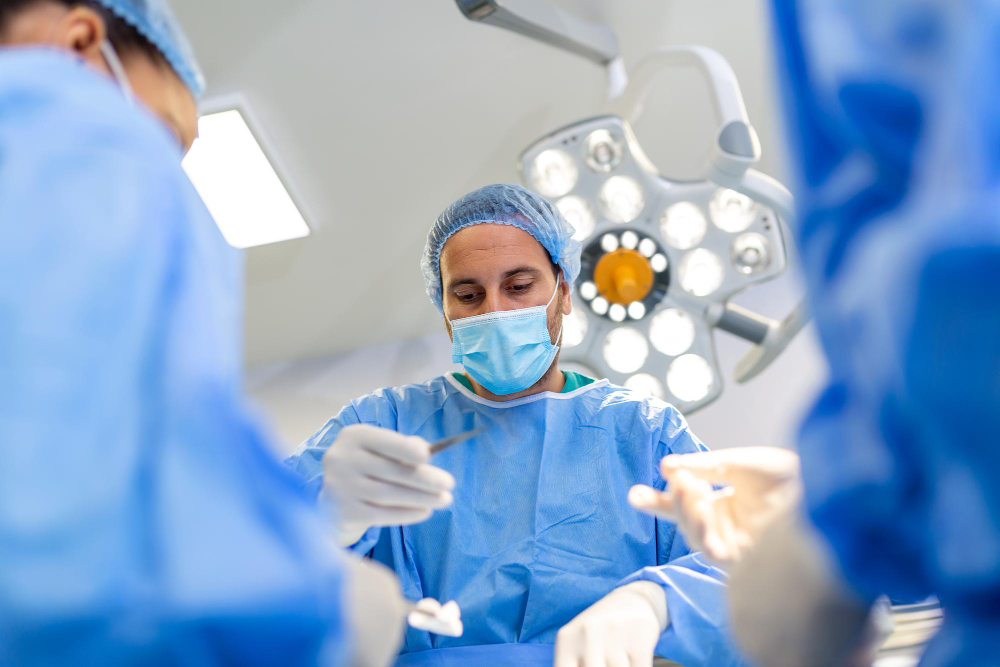
Hernias are among the most common medical conditions, and they often require surgical intervention. While hernias are not life-threatening issues, they should still not be ignored.
Your muscles and connective tissues act like a protective wall that keeps your organs where they belong. If there is a weak spot or opening in that wall, an organ or tissue can bulge through it, causing a hernia. While some hernias remain small and manageable for long periods, they do not resolve on their own. For many people, hernia surgery eventually becomes the most effective path toward relieving discomfort, preventing complications, and restoring normal function.
Understanding what hernia surgery entails, from early diagnosis to full recovery, can ease anxiety and empower you to make informed decisions alongside your healthcare provider.
Understanding Hernias: Types and Triggers
Hernias commonly develop in the abdominal wall, groin, or upper thigh. Their primary cause is a combination of muscle weakness and strain.
Common Types of Hernias
Common Causes and Risk Factors
When Is Hernia Surgery Necessary?
Not every hernia requires immediate surgery. Small, symptom-free hernias may sometimes be monitored using a strategy called “watchful waiting”. However, surgery is typically recommended if the hernia:
Emergency Signs
A hernia becomes a medical emergency if it becomes strangulated, meaning the blood supply to the trapped tissue is cut off. Get medical care immediately if you experience the following:
Types of Hernia Surgery ?
Modern hernia repair falls into three primary surgical approaches. The best option depends on the hernia’s size, location, your medical history, and your surgeon’s expertise.
| Surgery Type | Technique Overview | Typical Benefits |
| Open Surgery | A single incision is made over the hernia. The surgeon pushes the tissue back into place and reinforces the wall with sutures or a synthetic mesh. | Simple, proven approach; often done under local or regional anesthesia. |
| Laparoscopic Surgery | Several small incisions are made. A micro-camera and tiny tools are inserted to repair the defect from the inside using mesh. | Reduced post-operative pain, smaller scars, faster initial recovery. |
| Robotic Surgery | Similar to laparoscopy, but the surgeon operates precision instruments via a console providing 3D magnification. | High precision, optimal for complex or recurrent repairs. |
The Role of Surgical Mesh
In most adult repairs, surgeons use a synthetic mesh to reinforce the weakened tissue.
Preparing for Your Procedure
Proper preparation reduces surgical risks and helps ensure a smooth post-operative period.
Recovery and Post-Operative Care
Most hernia repairs are outpatient procedures, allowing patients to return home the same day. Full recovery varies depending on the surgical method and your overall health.
Immediate Post-Op (Days 1–3)
Short-Term Recovery (Weeks 1–2)
Long-Term Recovery (Weeks 3–6)
Potential Risks and Complications
While hernia repairs are safe and routine procedures, all surgeries carry minor risks:
Most patients recover without significant complications, and following your surgeon’s postoperative instructions can help reduce the risk of problems.
Long-Term Outlook and Prevention
Surgery provides an effective long-term fix for most patients with hernia, allowing a return to normal, pain-free physical activity. To reduce the likelihood of recurrence or developing new hernias in the future:
If you have a hernia, or suspect you may have one, you should get it checked without delay. Getting diagnosed at a multispecialty hospital allows doctors from different fields to evaluate your condition thoroughly and create the most suitable treatment plan. A hospital like New Medical Centre, with its state-of-the-art surgery department, the best surgeons, and the latest surgical technology, is where you will have access to the best treatment options.
Frequently Asked Questions About Hernia Surgery
- What is a hernia?
A hernia occurs when an organ or tissue pushes through a weak spot or opening in the surrounding muscle or connective tissue. Hernias commonly develop in the abdomen, groin, or upper thigh.
- What are the most common types of hernias?
The common types include inguinal, femoral, umbilical, incisional, and hiatal hernias. The location and cause of the hernia determine its type.
- When is hernia surgery necessary?
Hernia surgery may be recommended when the hernia causes persistent pain or discomfort, increases in size, interferes with daily activities, or has a risk of becoming incarcerated or strangulated.
- Can a hernia heal on its own without surgery?
Most hernias do not heal on their own because the underlying weakness in the muscle or connective tissue remains. Some small, symptom-free hernias may be monitored under a doctor’s guidance.
- What are the emergency signs of a strangulated hernia?
Severe or rapidly worsening pain, a red or purple hernia bulge, inability to gently push the bulge back in, severe nausea or vomiting, and difficulty passing stool or gas can indicate strangulation and require immediate medical attention.
- What are the different types of hernia surgery?
The main approaches are open hernia repair, laparoscopic surgery, and robotic surgery. The appropriate technique depends on the hernia’s location and size, the patient’s health, previous surgeries, and the surgeon’s assessment.