
Surgery in India has a remarkable history that spans thousands of years, reflecting the nation’s rich medical heritage and its commitment to scientific advancement. From the pioneering surgical techniques described in ancient texts to the cutting-edge robotic procedures performed in modern hospitals today, India’s surgical journey is a story of innovation, resilience, and continuous progress. Today, the country stands among the global healthcare leaders, offering advanced surgical care while honoring the legacy of its ancient medical pioneers.
The Ancient Foundations of Indian Surgery
The roots of Indian surgery can be traced back to around 600 BCE, when the renowned physician and surgeon Sushruta practiced medicine in ancient India. Often referred to as the “Father of Surgery”, Sushruta documented detailed surgical procedures in the Sushruta Samhita, one of the world’s earliest medical treatises.
This comprehensive text described more than 300 surgical procedures and over 120 surgical instruments. Sushruta’s work included operations for cataracts, fractures, wounds, bladder stones, and even reconstructive surgery. One of his most significant contributions was the development of rhinoplasty, a procedure used to reconstruct the nose, which was often amputated as a form of punishment in ancient times.
The surgical principles outlined in the Sushruta Samhita demonstrated a sophisticated understanding of anatomy, wound care, cleanliness, and patient preparation. Students were trained using practical models made from vegetables, fruits, and animal tissues before operating on patients, reflecting an early appreciation for simulation-based learning.
Challenges During the Medieval Period
Despite the strong foundation established by ancient scholars, the growth of surgery in India slowed during the medieval period. Various social, cultural, and political factors contributed to the decline of surgical practice and education. Invasive procedures gradually became less common, while traditional medicine focused more on herbal treatments and non-surgical healing methods.
However, many surgical techniques survived through generations of skilled practitioners. Reconstructive procedures, particularly rhinoplasty, continued to be performed by specialized families in different parts of India. These techniques would later attract international attention and influence the development of plastic surgery worldwide.
The Impact of Colonial Medicine
The arrival of European powers and the establishment of British rule brought significant changes to Indian healthcare. Western medical education began to expand during the nineteenth century, introducing modern surgical practices, scientific research, and structured medical training.
Medical institutions such as the Calcutta Medical College, established in 1835, played a crucial role in introducing modern anatomy, pathology, and surgical education. Indian students received formal training in surgery, enabling them to learn contemporary techniques and participate in the growing field of medical science.
During this period, surgical outcomes improved significantly due to advancements in anesthesia and antiseptic practices. Before the introduction of these innovations, surgical procedures were often painful and carried a high risk of infection. The adoption of anesthesia allowed surgeons to perform more complex operations, while antiseptic techniques greatly reduced postoperative complications.
Surgery in Modern India
Following independence in 1947, India faced enormous healthcare challenges, including inadequate infrastructure, a shortage of trained professionals, and a large population requiring medical services. The government responded by investing in medical education, hospital development, and public health initiatives.
The establishment of premier institutions such as the All India Institute of Medical Sciences (AIIMS) in 1956 marked a turning point in the country’s healthcare landscape. These institutions became centers of excellence for surgical training, research, and patient care.
Indian surgeons began making notable contributions across various specialties, including cardiovascular surgery, neurosurgery, orthopedics, and gastrointestinal surgery. As medical education expanded, a new generation of highly skilled surgeons emerged, strengthening the country’s healthcare system.
Advancements in Specialized Surgical Fields
The latter half of the twentieth century witnessed rapid advancements in specialized surgical disciplines. Cardiac surgery, once considered highly complex and inaccessible, became increasingly available through dedicated heart centers across the country.
Neurosurgery evolved significantly with the introduction of advanced imaging technologies such as computed tomography (CT) and magnetic resonance imaging (MRI). These tools enabled surgeons to diagnose and treat complex neurological conditions with greater precision.
Orthopedic surgery also advanced rapidly, with joint replacement procedures becoming more common. Improved implant technologies and surgical techniques enhanced patient outcomes and quality of life. Similarly, oncologic surgery expanded as specialized cancer centers developed expertise in treating a wide range of malignancies.
India’s growing skill in transplantation further transformed the surgical landscape. Successful kidney, liver, and heart transplant programs demonstrated the country’s ability to perform some of the most complex surgical procedures available in modern medicine.
The Rise of Minimally Invasive Surgery
One of the most significant developments in contemporary surgery has been the adoption of minimally invasive techniques. During the 1990s and early 2000s, laparoscopic surgery revolutionized patient care across India.
Unlike traditional open surgery, laparoscopic procedures require only small incisions through which specialized instruments and cameras are inserted. Patients benefit from less post-operative pain, reduced hospital stays, quicker healing, and a lower chance of developing infections.
Indian surgeons quickly embraced minimally invasive methods for gallbladder removal, appendectomies, gynecological procedures, and colorectal surgeries. Many healthcare centers developed specialized laparoscopic training programs, helping spread these techniques throughout the country.
The widespread adoption of minimally invasive surgery also contributed to India’s reputation as a destination for medical tourism. Patients from around the world increasingly sought affordable, high-quality surgical care in Indian hospitals.
Robotics and Digital Transformation
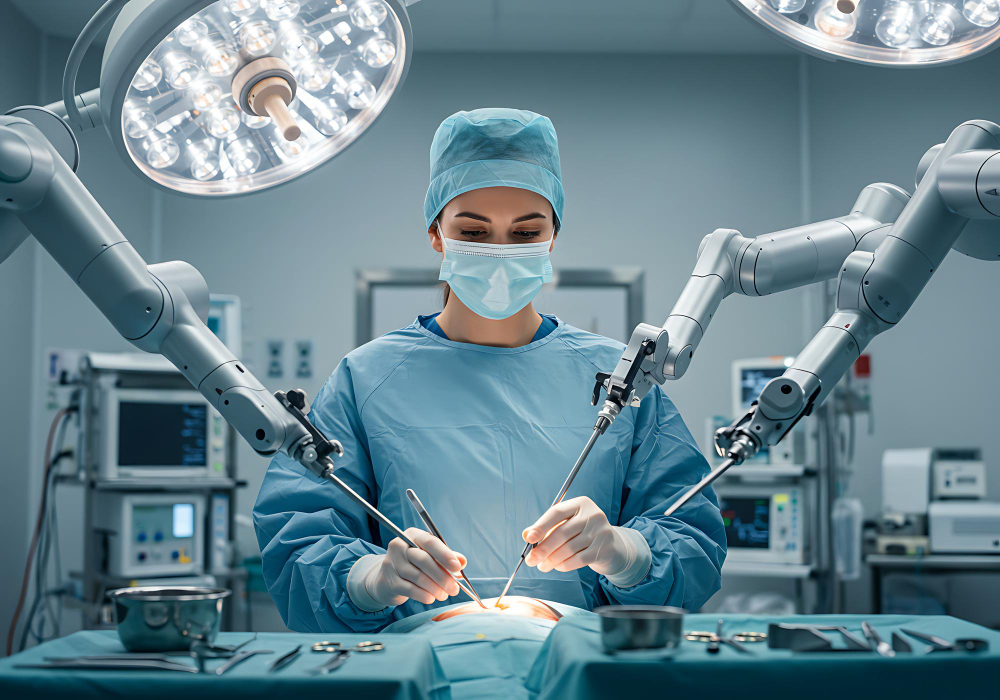
The twenty-first century has ushered in a new era of technological innovation. Robotic-assisted surgery is becoming increasingly common in major Indian healthcare institutions. These systems allow surgeons to perform delicate procedures with enhanced precision, flexibility, and control.
Robotic technology is particularly valuable in urology, gynecology, cardiac surgery, and oncology. Surgeons can operate through tiny incisions while benefiting from magnified three-dimensional visualization and highly accurate instrument movement.
Artificial intelligence, digital imaging, and advanced navigation systems are also transforming surgical practice. These technologies support better diagnosis, treatment planning, and intraoperative decision-making, leading to safer and more personalized patient care.
Telemedicine is further expanding access to surgical expertise. Specialists can now provide consultations, second opinions, and post-operative follow-up services to patients in remote areas, helping bridge healthcare disparities across the country.
The Future of Surgery in India
The future of surgery in India appears exceptionally promising. Continued investments in medical education, research, biotechnology, and healthcare infrastructure are driving ongoing progress. Emerging technologies such as augmented reality, artificial intelligence, precision medicine, and 3D printing are expected to reshape surgical care in the coming decades.
India’s growing emphasis on innovation and affordability positions it uniquely within the global healthcare landscape. Surgeons are increasingly participating in international research collaborations, developing new techniques, and contributing to medical advancements worldwide.
At the same time, the country remains connected to its rich medical heritage. The pioneering spirit of Sushruta continues to inspire generations of healthcare professionals who strive to improve patient outcomes through skill, compassion, and innovation.
The evolution of surgery in India is a remarkable story of continuity and transformation. From the groundbreaking achievements of ancient surgeons to the sophisticated robotic procedures of today, India has consistently demonstrated its ability to innovate and adapt. The country’s surgical journey reflects both scientific excellence and cultural resilience. As technology continues to advance and healthcare access expands, India is poised to play an even greater role in shaping the future of global surgery, building upon a rich surgical heritage that dates back thousands of years.
Comprehensive world-class surgical care is now available to everyone at multispecialty hospitals like New Medical Centre. The many surgical specializations available mean that holistic surgical treatment is offered under one roof, making life much easier for patients and their families.
Frequently Asked Questions About the History and Evolution of Surgery in India
- Who is known as the Father of Surgery in India?
Sushruta is widely known as the Father of Surgery. He made significant contributions to ancient Indian medicine and documented numerous surgical techniques in the Sushruta Samhita.
- What is the Sushruta Samhita?
The Sushruta Samhita is an ancient Indian medical text that describes surgical procedures, instruments, anatomy, wound care, and patient preparation. It is considered one of the earliest comprehensive texts on surgery.
- How advanced was surgery in ancient India?
Ancient Indian surgery was remarkably advanced for its time. The Sushruta Samhita described more than 300 surgical procedures and over 120 surgical instruments, covering treatments for cataracts, fractures, wounds, bladder stones, and reconstructive surgery.
- What was Sushruta’s contribution to plastic surgery?
Sushruta made important contributions to reconstructive surgery, particularly rhinoplasty, a procedure used to reconstruct the nose. His techniques later attracted international attention and influenced the development of plastic surgery.
- How did modern Western medicine influence surgery in India?
During the nineteenth century, Western medical education introduced modern anatomy, pathology, scientific research, and structured surgical training in India. Institutions such as Calcutta Medical College, established in 1835, played an important role in this development.
- How did anesthesia and antiseptic techniques improve surgical procedures?
Anesthesia made it possible to perform complex operations without the patient experiencing surgical pain. Antiseptic practices helped reduce infections and postoperative complications, improving surgical outcomes.